



pricetag

The PRICE of Safe Systems

Effective & compliant Health & Safety systems need some basic foundation paperwork in place.

To be fair, not all businesses need to have all of these in written form; if your company has 4 employees, or less, then there is no stipulated requirement for written documentation. It is, however, recommended that you do for various reasons I shall cover later.

For now, your basic H&S package can be covered through my PRICE model for compiling a basic, but effective, Safe System of Works (SSoW). 

P is for Policies

A company will have policies for anything and everything, but the Health & Safety Policy is the starting point.

Most procurement processes, accreditation standards and audit systems require a H&S policy, so having a good HSP is the best place to start.

The HSP outlines responsibilities, maps organisation commitments, and details the planning and implementation arrangements.

R is for Risk Management

Risk management is the whole purpose of the Safe System of Works: to keep people safe and avoid, or reduce to a minimum, the level of risk to which they are exposed while undertaking their work.

The central mechanism for this goal is the Risk Assessment, often closely associated with its sister document, the Method Statement. Collectively they are known the RAM (or RAMS)

Risk Assessments (RA) must be provided for all tasks undertaken, substances and equipment used, and specifically, for manual handling and fire safety. (FiTEMS)

Preparing a RAM for every task is a legal and moral requirement. As previously noted, technically, not all need be in a written format, but they must, nevertheless, be carried out.

Risk assessing is, actually, a basic and natural process, that we all, at some level, do on a daily basis. There is, however, a simple, but proscriptive, formula that a legally acceptable H&S RA must follow to ensure thorough coverage of all work-based risks.


  • For writing a suitable & sufficient – and thus legally acceptable – risk assessment, start with my “Risk Assessment Basics” article. 

is for Inspections

Site inspections, performance monitoring and system audits are for proof as much as process. (SIPMSA)

Inspections, audits, and monitoring (IAMs) are crucial for continuous improvement and development. They help find weaknesses and highlight strengths.

It is often said that “if it cannot be measured, it cannot be controlled”. Safety Systems, and their related accreditations, tend to support this thought.

What is more, if you intend to gain an external accreditation to help with your professionalism, reputation, or procurement, then these are going to be indispensable.  


  • For advice on Inspections, Audits, & Monitoring, check out my article; “I AM Diligent.” 

C is for Competence.

Information, instruction, training and supervision (IITS) are all basic and necessary constants for safety.

Competence is often centered on training, but this is not the only ingredient to being competent. Nonetheless, for most, training holds the key to competent staff. So, a detailed training record – or matrix – should be complied and kept on file.

Once again, it is a legal and moral demand of a business owner to ensure that no person should undertake anything for which they are not competent to do, unless supervised by one who is.

Relevant information and accurate instruction must be given constantly, suitable and specific training must be provided, and capable supervision must be available wherever there is a need.

  • For a closer look at the ingredients of being competent, see my article:  “What MAKES Competence?”
  • For effective training, first check out my Tool-Box Teaching article
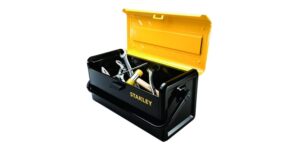
is for Equipment Records

Inspections, testing, compliance and allocation records and logs are required for all equipment used (CITA).

Things break, get lost, and generally mistreated or worn out, so a system for checking, care, repair and replacement is necessary.

Procurement, replacement, maintenance and distribution of equipment, tools, machines and materials, must all be carefully controlled.


  • For a discussion on equipment control, look at my 3R system (Register, Review, Record)

Paying The Price of Proof


For each of the five core categories highlighted above, separate documents, or document, for each will be necessary for a complete Safe System of Works.

As mentioned above, though, the current H&S legislation notes that for the small enterprise, of 4 employees or less, there is no legal insistence to write all of these system proofs down.

This is an acknowledgement of the fact that such small companies often do not have the resources to document everything.

Nonetheless, having at least a rudimentary version of each of the above will help support small companies in planning and measuring safe performance, as well as providing tangible proof in the case of an incident or injury where you will be required to prove – in written, procedural, or verbal form – that your systems of works are safe.    

SLAM will help you to gain, create and culture the necessary knowledge – and documentation – for your own thorough Safe System of Works.

Call: 07878 124 442

Share this post