Hazard Identification
The CATegories of Hazard
Hazard recognition is the first step to risk assessment.
As covered in part 1, hazards can be grouped into categories according to the type of threat they pose. Having a systematic method to help find them is, therefore, extremely useful.
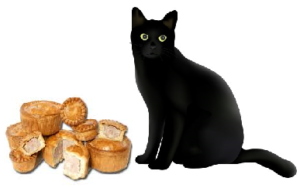
The framework that I use is my CAT method: a basic version – Big Cats Eat People – is used for basic tasks, and the more evolved version – My Black Cat Eats Every Pork Pies – for more complicated ones.
The categories are generally the same for both models, but for a few tweaks. The “evolved” version includes three new groups, but two of which are just specialised extensions from the physical risk group, with the third being the only really “new” group.
The thing to note through this lesson is that there are no hard-and fast rules. Nor are there any legislative enforcement programmes to dictate what you put where. The important thing is simply that your process – whatever you use – helps to identify all foreseeable, relevant, significant risks and you are able to control them.
How you find them is really not important; that you do find them, is!
The following method will provide a systematic process for succeeding in this initial, crucial, step for suitable and sufficient risk assessments.
What’s in the Box?
My system is all based on the existence of “My Cat”. Thankfully, my cat is not like Schrodinger’s; there is no doubt as to whether this cat is there or not; alive or dead; hazards are always lurking and, therefore, so is My Cat. It is not about whether hazards exist but how much exposure you will have to them. My Cat is always prowling!
What, then, fits where: into which category does what hazard go?
- “My” – M for Mechanical: (Specific legislation: PUWER).
This is the first “specialist” category. It is generally connected to the use of equipment. This category is a useful one to focus specifically on your apparatus and machines.
It does not really matter whether you identify the these types of risk – such as “cuts”, “punctures”, “abrasions” or “lacerations”- from blades, sharps, or drill-bits by considering the “Physical” category or “Mechanical” one: just as long as you do identify the risk! This specific heading does help to focus your search for them though.
Not Schrodinger’s
Unlike Erwin’s famous feline, there is no doubt about my cat being alive and well. All work activities have hazards, and all hazards cannot be eliminated.
So, It is not about the existence of hazards, it is about exposure to hazards!
Your job is to find them, remove them if possible, and control what you cannot. This dark-furred face-filling feline prowls around every work activity, so use him!
- “Black” – B for Biological (Specific legislation: COSHH)
Mastering the difference between biological and chemical (the next one), can be tricky. The key is to focus on the “bio” bit. “Bio” is Greek for “life”, so biological refers to something “living”.
Is the substance in focus alive, and thus pose a risk of an infection? If it is, it is biological.
Is there a risk of contact with a Bactria? (Leptospirosis from rodent urine, or psittacosis from bird fouling, for example.) Is there a risk of exposure to a virus? Well, do we need to get into the effects of Covid? The past year has shown us how an uncontrolled virus threat can greatly affect us all. (I know that there is a debate on whether a virus is a living thing or not – and after a little study into the issue, I would say that I lean toward the “non-living” argument –but for arguments sake, I keep it in the biological category.)
There may be some cross-over evident. Water, for instance is a chemical, but it may contain bacteria, which is biological.
- “Cat” – C for Chemical (Specific legislation: COSHH)
All substances that are not living are, therefore, in the chemical category. Asbestos, lead, detergents, acids and alkalis, water, dusts, fumes, smoke… all are chemical hazards.
As you can see, our focus can be locked on to what we immediately consider a “chemical” such as a cleaning agent, paint, cement, or other fluids and materials. The problem is that we are prone to be
distracted by the obviously easy ones and can often miss the less-obvious: the fumes and the dusts, for example.
Here is another cross-over point. Dusts and fumes in some situations can be considered by some to be “environmental” hazards. It all depends on the context and circumstance, and as you increase your risk recognition skills you will soon master the subtle differences. Remember: it is not important right now how you identify the risk – through environmental or chemical identification – just that you do!
Core Cats
- “My” – Mechanical
- “Black” – Biological
- “Cat” – Chemical
- “Eats” – Ergonomically
- “Every” – Environmental
- “Pork” – Physical
- “Pie” – Psychological
100% Harm Free
You cannot make your environment hazard free. You can, however, make it harm free.
The important things is not the definitive categorization of the hazard but the specific recognition of its existent and the suitability and sufficiency of its control.
Cat’s Crossing
Using a band-saw will have many physical threats (e.g. cuts, severances, burns) but it will also cause a lot of dust, thus posing an environmental hazard
Storing water in tanks, which is a chemical substance but would also have physical hazards of drowning or causing flood damage, and also may be infected with Legionella – which would be a biological hazard.
Many activities have several representations from many categories of hazard within them, so be alert to potential cross-overs.
- “Eats” – E for Ergonomic (Specific legislation: WP(HS) + PUWER)
This is the second “new” one that is pulled form the “physical” group. It is a tricky one for many, but like the “mechanical”, this type is about focusing on specifics.
For instance, “substances” could have been a one-for-all category for both biological and chemical, but it works so much better to have them separated. So too for the mechanical and ergonomic.
Ergonomics deal with the relationship to the user. Sitting at a desk in front of a PC all day; using a mouse and keyboard: these are two common examples. The hazard comes from the interaction with the equipment rather than the actual features of the equipment (cuts form the sharp blade versus blisters from the poor designed handle).
A restricted space may force a deviation from the recommended method of use; the layout, design and practical features are the focus here. Consider the design of right-handed scissors and the effect these have when used by left handed people.
Using a broken handled broom or a vacuum with its tubes missing, both will cause an unnecessary, excessive, bending to operate, and thus, an ergonomic related risk.
- “Every” – E for Environmental (Specific legislation: WP(HS)
The most obvious would be weather related issues. Excessive heat, cold, wet, wind; the presence of ice or water under foot. Naturally, you will see another cross-over as the ice and water would lead to the physical hazard of slipping, but again; it is all about focus: identifying all relevant, significant, risks – not about what route you take, or vehicle you travel in, to get there.
- “Pork” – P for Physical (Specific legislation: take your pick!)
This is that general “catch-all” category. Slipping, tripping, crushing, dropping, falling… whatever is left out from the task specifics.
Identification of these general hazards may well come from the specific considerations above, but sometimes things get neglected, or focus is shifted so much that it gets missed completely. Keeping this safety-net category can, literally, be a life saver.
For example, slipping may be identified though the chemical identification process, owing to a soap spill. The general slipping on a polished or uneven surface, or even a substance spill by another person entirely, could be missed if not for this general.
- “Pie” – P for Psychological (Specific legislation: WP(HS)
Stress! Lock-down syndrome! Pressure from clients or employer demands: unrealistic workload and time-frames. These are common causes of negative health effects. Others include verbal abuse; racism, sexism, favoritism, prejudice & priorities.
The roots of psychological hazards are as many as any of the other more tangible hazards. Perhaps, even, the root of most injuries at work are, in some way or the other, related to psychological issues. A lack of concentration, distraction, deviation; poorly managed or assessed tasks, or lack of clear leadership or poor management, unclear communication, misunderstood instruction or unrealistic expectations. All affect the psychology of the individual or the team and thus contribute to, or are an outright cause of, calamity.

Black Cat, Grey Hairs
Although my cat is significantly black, he does have a few grey hairs.
Naturally, there are a few “grey areas” and opinions may vary according to the system.
Most hazards, I am glad to inform, are clear and obvious. The few that struggle to be defined specifically – kind of “category-fluid hazards” – can be fitted into any one you like, as long as you spot them.
They may be confusing at first, but with practice, you will soon find a way to deal with them.
For example, dusts & fumes may be spotted by considering the “Mechanical” category. Others, however, may identify them under “Chemical” category. Still another may consider them as an “environmental” hazard.
Remember! These are just suggestions: there is no legislation to define what goes where, just logic and reason. While some are, without question, definitive (tripping and falling are physical hazards, for example) others may not be so clear cut.
This model offers a clear framework to help with the process it is not a definitive dictated proscription.
Law & Order
Categorizing hazards is not a legislative requirement, nor are there any enforcement programmes to dictate what you put where.
Providing “suitable and sufficient” risk assessment for every “undertaking”, however, is!
The specific legislation that sets this legal requirement is Regulation 3, of the ‘Management of Health and Safety at Work, Regulations of 1999’.
What my CAT method does is simply help you to have a robust, though, and systematic process for succeeding in this initial, crucial, step of risk assessment.
Suitable & Sufficient
All tasks must be risk assessed. All risk assessments must be suitable and sufficient for the tasks. The first, crucial, step to suitability and sufficiency is the accurate and thorough identification of all relevant, significant hazards to control all foreseeable risk.
If this step fails, you will not succeed in the subsequent ones. It all anchors on this initial process. Use a system that helps you to be thorough. It is easy to miss stuff; whether from complacency or task-blindness; lack of experience or knowledge (competence), so don’t take risks with your risk assessments.
Take My Black Cat with you and he will help to catch all those rodents of risk.
What Next?
- For more on categories of hazard, check out the HSE, IOSH, or any other industry specific sites for guidance.
- Hazard identification is the first step of risk assessment: to explore the subsequent ones, see my article: Risky Business
“You cannot control what you cannot see. Stop, look & listen: then you have control.”

Call: 07878 126 442