


Hazard Identification
Looking For Trouble
Identifying hazards is the first step of effective risk assessment.
If you do not see the danger, you will not, and cannot defend against it. Before you can do anything about “it” you need to know what “it” is!
There are a variety of methods; and there certainly is no one system that works for all. Depending on what source you research, there will be a variety of labels and terminologies used for types of common hazards.
Typically, hazards are grouped into what are called categories.
This means that the type of hazard is grouped into a root type of threat. For instance, using acids or alkalis, cleaning detergents or soaps, paint & thinners; all are grouped into the “chemical” category. Whereas tripping over cables, slipping on wet surfaces, hitting your head on an overhanging bar or beam would all be examples of what we class “physical” hazards.
My model is designed to help you systematically work through all relevant hazards relevant to your activity.
The key to remembering this method is in the very term categories (notice the italicized cat part!)
Starting Simple: categories of hazard
I created a mnemonic system to help me remember the list of common categories. I began with a simple one that concentrated on the four core categories most commonly encountered in most tasks: biological, chemical, environmental and physical.
This list gave me the following mnemonic phrase:
“Big Cats Eat People.”
Now, it is the CAT that is the link here. The “cat” in cat-egories is the first focus.
If you are thinking about hazard categories, think of “cats” – thus, the emphasis on “CAT” in CATegories.
The type and behaviour of this cat sets up the rest of the mnemonic. Each word begins with a letter that represents the first letter of the category we need to cover.
Seek & Ye Shall Find.
Identifying hazards is the first step of effective risk assessment.
Having a systematic approach to find and then control all foreseeable, relevant, significant risks will ensure that you do not miss anything and you, your crew, and anyone affected by your activity, remain safe.
B – “Big” – Biological
C– “Cats” – Chemical
E – “Eat” – Environmental
P – “People” – Physical.
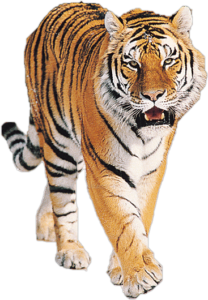
Dead or Alive?
It is not about existence, it is about exposure.
Hazards are inherent within all activities, and you cannot make your environment “hazard free”. Sometimes we can remove hazards, other times we have to control them by reducing the risk that they pose.
When you now think about identifying the CATegories of hazard, hopefully your mind will be nudged to remember this carnivorous CAT. The image should then readily spring to mind: a ferocious feline with fearsome fangs – a threat to people!
This is a system that I have used with great success over the years to aid in the identification of hazards relevant to any activity, giving confidence that nothing significant will be left, forgotten or missed.
This simple man-eating menace version of the model is a perfect introduction to the system, and is useful to help newbies get used to the terminology of categorization. I use this model exclusively when teaching introductory or awareness courses but also for the “in the field” operational crew – who need a dynamic response ability when working at the coal face, as it were! It is short, sharp
and simple and helps to provide an effective checklist for immediate assessment of an ever-changing work environment.
If, therefore, you are inducting a new recruit who will be under the supervision of a competent colleague, or running a TBT to highlight the dynamic nature of risk awareness on site, then the simpler one might suit perfectly.
If, however, you are teaching someone to prepare and write risk assessments, to assess on-site safety performance, or monitor the working environment, then I recommend a more thorough model.
A Role Model
This is not a rigid checklist. It is simply a model to establish a process. A framework to identify the core hazards found in most environments.
It is not an exclusive list.
Additional adjustment and additions may be necessary to tailor to your specific working conditions.
My CAT should provide a guide to get you started, though.
Maulers to Moggies
The system soon had to evolve. To widen the focus of identification, thus allowing the scope of hazard recognition to accommodate more complicated activities – and more advanced course material – a more complex system was necessary.
I could have kept the basic model, and it would work well enough. People liked it, it was fun, and it taught the idea of grouping hazards for structural coverage and provided a useful frame work with an effective memory aid.
Like everything, however, to remain effective, safety management should also develop and improve. It should live. Sometimes you need to expound, sometimes you need to simplify: the point is, you need to adjust to the needs as they arise. Having a “one-size fits all” attitude will not get the best out of your people or your systems.
Safety is not static. Things are always moving, situations are always changing. People, the environment, the equipment, and the activities undertaken, all change constantly, all evolve eventually: your safety systems have to adapt and evolve with them.
The same principle goes for teaching these systems as well as developing them. If the system is too complicated, it will be confused, forgotten, or even just ignored. If it is too simple, not only will it tend to bore the more competent, and perhaps even patronize, but more importantly, vital bits get left out.
So, for the more advanced safety-bod, and to cover more complicated activities: meet my pie munching moggy.
It is bigger, better & stronger: “My Black Cat Eats Every Pork Pie”:
Simple…
- B – “Big” – Biological
- C– “Cats” – Chemical
- E – “Eat” – Environmental
- P – “People” – Physical
Evolved…
- M – “My” – Mechanical
- B – “Black” – Biological
- C– “Cat” – Chemical
- E – “Eats” – Environmental
- E – “Every”– Ergonomic
- P – “Pork” – Physical
- P – “Pie” – Psycological
Picture Perfect
This kind of thing does work. The mind loves images, and memory works better with pictures than words.
This structured memory aid provides a systematic process of hazard identification, and will help find all relevant, significant, hazards of any task.
You might not get every bit right first time, but after a few attempts, you will remember the whole thing easily.
- M – “My” – Mechanical
- B – “Black” – Biological
- C– “Cat” – Chemical
- E – “Eats” – Environmental
- E – “Every”– Ergonomic
- P – “Pork” – Physical
- P – “Pie” – Psycological
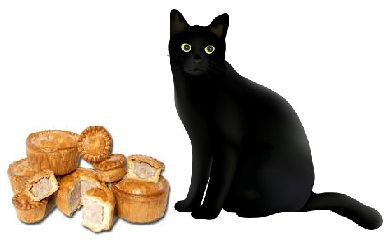
Here we have a rather fat, black-furred feline, with a huge appetite for meat filled savories.
As you can see, it includes a few “breakout” categories that focus on a couple of very specific hazards that relate to the more complicated action. Two of the breakouts (mechanical & ergonomic) are related to the physical category, and the other (psychological) is a whole new addition to cover mental wellbeing.
This kind of thing does work. The mind loves images, and memory works better with pictures than words. It is just about painting the right picture to support the process you need to remember and recall. Try it! You might not get every bit right first time, but after a few attempts, you will remember the whole thing easily. And you will not miss any significant category through your systematic process of hazard identification.
Give something that can be handled comfortably, But give them something that covers all the necessary bases for the task ahead.
Now that we have a structure for identifying the core categories of hazard, whether using the simple or the evolved model, we will need to know what hazard fits under what heading. For a discussion of this, go to my next article, Hazard Identification (part 2): The CATegories of Hazard: and find out what goes where.
Grow don’t Grind
Safety is not static. Things are always moving, situations are always changing. People, the environment, the equipment, and the activities undertaken, all change constantly, all evolve eventually: your safety systems have to adapt with them.
Grinding through the same old stuff with monotony, forcing out of date methods into new environments, will not encourage commitment.
Be flexible and adjust.
Grow your systems to match your expansion and create a culture of evolution and progression.
Be Superb!
When developing a system, create something that can be handled comfortably. At the same time, however, give them something that covers all the necessary bases for the task ahead. There is a big difference between “complex” & “complicated”. Something can be complex (with many parts) but does not have to be complicated (difficult to grasp). Keep it simple, precise, relevant & brief: this is SuPeRB teaching!
What Next?
- Hazard Identification: Part 2 – “The Categories of Hazard”
- For how risk assessments can help to support good practice, see Risk Assessments – Avoid HARM!

“It is not about existence, it is about exposure. You may not be able to make your environment hazard free, but you can make your activity harm free!”
 Call: 07878 126 442